|
|
TWENTY-FOURTH ANNUAL MEETING
OCTOBER 2025
MASON CITY, IOWA
The 24rd Annual Meeting of the Walter Burley Griffin Society of America will be held in early October 2025 in Mason City, Iowa.
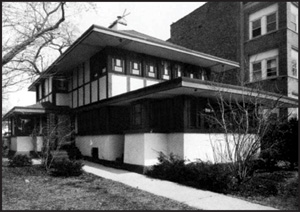
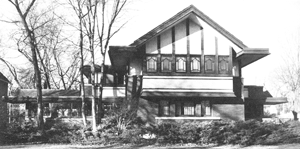
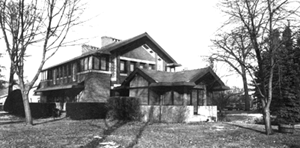
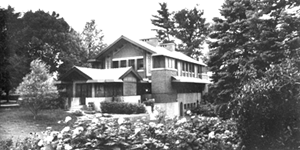
Mason City has the largest group of Griffin-designed homes in the United States. Check back in the future for all the details of the meeting.
|
|
|
|
TWENTY-THIRD ANNUAL MEETING
SATURDAY, 14 SEPTEMBER 2024
LAKE GENEVA, WISCONSIN
The 23rd Annual Meeting of the Walter Burley Griffin Society of America was held on Saturday, 14 September 2024, investigating the architecture around the picturesque summer retreats of Geneva Lake and Delavan Lake in southern Wisconsin. The Saturday morning session and lunch took place at the Lake Geneva Country Club, on the south shore of Geneva Lake at W3398 S. Lakeshore Drive, Lake Geneva. Designed by Spencer & Powers in 1915, the concrete-block clubhouse remains much as it was constructed, magnificently sited. Lecture topics included the organic architecture of John Randal McDonald of Racine, by Dave Erickson; a recently restored Wright System-Built house in Shorewood, Wisconsin, by Nicholas Hayes; and the Summer Houses of the Prairie School, by Paul Kruty.
|
|
|
|
TWENTY-SECOND ANNUAL MEETING
SATURDAY-SUNDAY, 3-4 JUNE 2023
EVANSTON, ILLINOIS
Mark your calendars for the next Griffin meeting, scheduled for the weekend of 3-4 June 2023 in Evanston, Illinois. Board member Tom Hagensick has secured the auditorium of the Block Museum at Northwestern University for the morning session of lectures. Details of speakers, afternoon tour sites, and supplementary events on Sunday will be forthcoming. See you there! |
|
|
|
TWENTY-FIRST ANNUAL MEETING: AN ELMHURST EXPERIENCE
In 2022, for the first time in three years, the Griffin Society held an annual meeting. On 7 May, on a crisp, clear spring day, half a hundred intrepid Griffin archi-friends arrived in the Griffin family’s home town. Doors opened at 8:00AM at the Schaible Science Hall of Elmhurst University for registration. The morning session, held in a terraced, semi-circular lecture hall, began at 9:00 and ended for lunch at noon. Following President Peter Burley Griffin’s opening remarks, Michael Allen, President of the National Building Arts Center in Sauget, Illinois [web.nationalbuildingarts.org], explained the purpose of this extraordinary institution in a talk entitled, “Archive and Artifact: Building a New Institution.” Located in 13 buildings on 15 acres of an old steel casing company built in 1922 and closed in 2001, the collection includes thousands of objects salvaged from an array of historic buildings, many from St. Louis but also with examples from around the country, plus an incredible archival assemblage of journals, pamphlets and ephemera. In an engrossing manner, Michael explained the challenges and accomplishments encountered in managing such an operation and future plans.
Moving from the general to the specific, Mary Brush, of Brush Architects, Chicago, recounted the preservation efforts involved in managing a sixty-year-old Bruce Goff remodeling in “A Prolonged Effort: Restoring Bruce Goff’s Bachman House.” In 1947 Goff was commissioned to remodel an 1889 frame house located a few blocks from the intersection of Foster and Broadway on Chicago’s north side. A Chicago Landmark since the early 1990s (like Goff’s other design in Chicago, the Turzak house visited by the Society in 2018), the Bachman remodeling presented an incredible challenge for preservation and restoration. Mary’s engaging account of her ultimately-successful travails was further enhanced by comments from one of her fully-dedicated client/owners, present in the audience.
Following the mid-morning break we were treated to a presentation of the stunning digital recreation of Solid Rock commissioned in September 2021 by the Griffin Society from Studio GWA in Rockford, Illinois. Aaron Holverson, a partner and senior project architect, and Jason Truax, architectural designer, explained the process of “Recording Solid Rock” With paired projectors in operation, they showed us the level of detail captured by their scans, as well as the possibilities for producing plans and sections from those scans.
The session ended with Paul Kruty telling the history of the Griffin family in Elmhurst, presenting their family home, replete with Walter’s landscaping, and their church, decorated with Walter’s Sullivanian stencils—both buildings gone long since—as well as a handful of Walter’s earliest architectural projects for friends and neighbors. Among his most important clients was the T. E. Wilder family, whose barn and stable for their estate was located a short distance from our lecture site, a project designed by Griffin while working for Wright and constructed under the aegis of Wright’s office.
Afternoon tours included the two Elmhurst houses designed by Griffin—the 1903-4 Emery house and the 1909 Sloane house—as well as Wright’s 1901 Henderson house, a commission brought into Wright’s office by Griffin and supervised by him. These three masterpieces had been part of our last visit to Elmhurst, in 2000 during the first Griffin Society meeting. An added treat for this return visit was “Robinwood,” a house designed by the New Jersey architect Joy Wheeler Dow and built directly east of the Griffin homestead in 1908 while Walter lived across the fence. A final stop at the Elmhurst Art Museum to visit Mies Van der Rohe’s McCormick house as the temporary exhibition, “Houses of Tomorrow: Solar Homes from Keck to Today,” completed the eventful day. |
|
|
|
NINETEENTH ANNUAL MEETING
In Park Ridge Illinois
June 23-24, 2018
The Griffin Society held its nineteenth annual meeting
in the Chicago suburb of Park Ridge on the weekend of 23-24 June 2018.
The morning session was held at the Pickwick Theater, 5 S. Prospect Ave, Park Ridge, 60068.
The afternoon tour included open houses by Bruce Goff, Barry Byrne and Harold Zook and a late church by Lloyd Wright, followed by a reception at the Iannelli Studios Heritage Center, 255 N. Northwest Highway.
On Sunday morning, Bruce Goff’s Ruth Ford house in Aurora was open for a tour.
|
|
|
|
EIGHTEENTH ANNUAL MEETING
In Southern Illinois: Edwardsville and St. Louis
June 17-18, 2017
The Griffin Society held its eighteenth annual meeting in downstate Illinois near St. Louis, Missouri on Saturday, 17 June, and Sunday 18 June. The featured building was the Ralph Griffin house in Edwardsville, built for Walter’s brother’s family in 1909-10. Visited by the Griffin Society in 2002, the house is now fully restored and is one of the subjects of a book being issued by the Society at the June meeting. |
|
|
|
SEVENTEENTH ANNUAL MEETING
In the Beverly Neighborhood
of Chicago, IL, June 18, 2016
The Griffin Society held its seventeenth annual meeting on June 18, 2016 in the Beverly neighborhood of Chicago, IL, home to the largest collection of Griffin houses in one neighborhood, plus tours of buildings by other architects. The lectures and building tours were on Saturday June 18. |
|
|
|
SIXTEENTH ANNUAL MEETING
June 20, 2015
in Madison, Wisconsin,
The Griffin Society held the sixteenth annual meeting on June 20, 2015 in Madison, Wisconsin, home to the Robert Lamp house, a Wright building supervised by Griffin, as well as a host of great Prairie buildings by Sullivan, Wright, Purcell & Elmslie, George Maher, and Claude & Starck. The lectures and building tours were on Saturday June 20. |
|
|
|
FIFTEENTH ANNUAL MEETING
30-31 MAY, 2014
In Mason City, Iowa
The fifteenth annual meeting of the Walter Burley Griffin Society of America was held in Mason City, Iowa, on Friday and Saturday, 30-31 May 2014. And what a meeting it was! Thanks to Bob McCoy’s continued persistent efforts and goodwill, there were eleven buildings open for touring. This necessitated two afternoons of tour times—Friday and Saturday—and included a keynote lecture and reception Friday evening and symposium Saturday morning.
TOURS on Friday and Saturday began at 1:00 PM and lasted until 4:30 PM. Half the houses were open one afternoon and the other half for the second afternoon, with the Blythe and Melson houses open both afternoons. Friday evening there was a reception at the MacNider Museum with a keynote address by Professor James Weirick of the University of New South Wales, Sydney, Australia. Saturday morning’s session included talks on a wide range of subjects by Richard Mohr, Dan Naegele, Adrienne Kabos, Peggy Bang and Paul Kruty.
|
|
|
|
Griffin Society 13th Annual Meeting
23 June 2012
In Minneapolis, Minnesota
The thirteenth annual meeting of the Walter Burley Griffin Society of America
was held in Minneapolis on Saturday, 23 June 2012. Similar to this past
year, the meeting was centered around the work of the Griffins’ mentors
and associates among the architects of the Prairie School, including most importantly
Purcell & Elmslie. A special showing of the Griffin material held at
the Northwest Architectural Archives of the University of Minnesota was
arranged. The meeting was coordinated by architectural historian Richard
Kronick. After the meeting, the group toured the
Louis Sullivan’s National Farmers’ Bank in Owatonna.
|
|
|
GRIFFIN SOCIETY 12TH ANNUAL MEETING
HELD JUNE 25, 2011 IN OAK PARK, ILLINOIS
By Janna N. Hagensick, Architect
The Walter Burley Griffin Society of America held its
twelfth annual meeting on Saturday, June 25, 2011
in Oak Park, Illinois. The event, including the Friday
Board of Directors meeting, was hosted by the
Oak Park Historical Society at George Maher’s Farson-
Mills house, also known as “Pleasant Home.”
As my first Society meeting, it was especially exciting
for me personally as my husband, architect Tom
Hagensick, was appointed to the Board of Directors
at Friday’s Board meeting. Having both been taught
by Paul Kruty as graduate students at the University
of Illinois, we were grateful for Tom’s opportunity to
share his voice and enthusiasm for the Prairie School.
The meeting was followed by dinner in the entry hall
of “Pleasant Home,” where we shared lively conversation
and listened to stories told by several of the “oldtimers”
on the Board.
Saturday morning could not have been, dare I say,
more pleasant. Approaching “Pleasant Home” one is
lured by a wide processional walk, leading to a covered
porch of considerable width and breadth, before
being swallowed up by the massive front door.
One could imagine what it would be like to attend
a party hosted by one of its original owners, as the
house buzzed with anticipation of the conference. As
the meeting began, we were greeted by Society President
Peter B. Griffin and Oak Park Historical Society’s
Laura Thompson, who shared with us recent
and future restoration work on “Pleasant Home.”
Julia Bachrach, historian for the Chicago Park District,
presented “Prairie School Buildings in Chicago
Parks,” in which she demonstrated the depth of our
park system and accompanying architectural treasures,
as well as her personal “discovery,” the work
of Clarence Hatzfeld. This was followed by architect
John Eifler’s presentation of his restoration plan for
Griffin’s Cooley House in Monroe, Louisiana. The
home, originally designed in 1908 and built in 1926,
is the last Griffin design built in the United States.
The house had suffered considerable alteration over
the years but is in the beginning phases of restoration
funded by the City of Monroe and the Cooley
House Foundation. It is intended to become a house
museum and cultural events center. Following a coffee
break, Paul Kruty presented his paper “Robert
Spencer in Oak Park and River Forest,” a captivating
story of the life of and work of the Prairie School
architect and integral community member, whose
work featured prominently on the afternoon tour.
Lastly, homeowner Dan Spillane spoke on the restoration
of his Spencer home, the Broughton House
in River Forest. It was a truly dedicated effort over
the course of four years to restore the original ideas
and details and incorporate smart building systems
to ensure the longevity of the refurbished building.
Following lunch, all were ready for an enjoyable afternoon
touring four houses in Oak Park and nearby
River Forest, as well as a planned visit to William
Drummond’s River Forest Methodist Church (for
some unknown reason, church members failed to
open the building as promised and didn’t respond
to phone messages), not to mention the array of architecture
appreciated just on the exterior. The following
homeowners graciously opened their doors
for our indulgence: Dan and Betsy Spillane (Broughton
House, architects Spencer & Powers); Susan and
John Curran (Pellet House, architects Spencer &
Powers); Paul Harding (Davenport House, architect
Frank Lloyd Wright); and Marc Martinez and Susan
Price (Smith House, architects Tallmadge & Watson).
All in all, it was an exceptional event that would not
have been quite as wonderful without the effort and
support of so many dedicated people. I look forward
to more great experiences with the Walter Burley
Griffin Society in the future.
|
|
GRIFFIN SOCIETY 11TH ANNUAL MEETING
HELD MAY 22, 2010 IN ANNA, ILLINOIS
The eleventh annual meeting of the Walter Burley Griffin Society of America was held on May 22nd in downstate Illinois among the rolling hills of the Shawnee National Forest, at Griffin’s major public building in America—the Stinson Memorial Library in Anna.
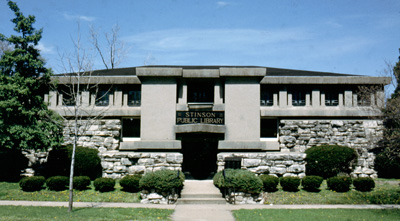
Photo by Mati Maldre
Three subjects of interest were explored at the meeting: Griffin’s library; a remarkable house nearby by the great Organic architect, Bruce Goff; and the Anna Pottery, a local company run in the late 19th century by two brothers, Wallace and Cornwall Kirkpatrick. The meeting's itinerary was follows: morning meeting at the Stinson library, with three lectures in the assembly hall—Paul Kruty on the library, Richard Mohr on the startling products of the Anna pottery, and Richard Helstern on the creation of the Goff house for Hugh and Minna Duncan. Box lunch in the library. Afternoon tour: several additional sites in Anna, then to Cobden for a visit to the Union County Historical Museum, which has a comprehensive display of Anna pottery, and ending with a reception at the Giant City Lodge.
|
|
GRIFFIN SOCIETY 10TH ANNUAL MEETING
HELD JUNE 20, 2009 IN KENILWORTH, ILLINOIS
The tenth annual meeting of the Walter Burley Griffin Society
of America was held on Saturday, 20 June, in Chicago’s north-shore suburb
of Kenilworth. The morning session of lectures and announcements were presented in the Kenilworth Assembly Hall, designed
and built in 1906 by George W. Maher.
Speakers included Kathy Cummings, discussing Maher’s planning in Kenilworth,
Sharon Darling on Teco pottery, and Paul Kruty’s examination of Trier
Center and the Tempel subdivision, located in nearby Winnetka. After lunch,
houses by Griffin, Maher, and John Van Bergen in Kenilworth and Winnetka
were open for tour.
106 members attended the meeting. A good time was had by all!
The Society's 2010 annual meeting is tentatively scheduled to be held at the Griffin-designed Stinson Library in Anna Illinois. The details will be announced on the website and in our Newsletter.
|
|
9TH ANNUAL GRIFFIN SOCIETY MEETING, LECTURES & TOUR
JUNE 14, 2008 IN GRAND RAPIDS, MICHIGAN
The ninth annual meeting of the Walter Burley Griffin Society of America will be held in Grand Rapids, Michigan on Saturday, June 14th. The morning meeting and lectures will be held at the Fountain Street Church, a 1923 Italian Romanesque style building with a chapel designed by Alden Dow.
For driving directions go to Google and type in “Fountain Street Church” . The first option on Google is the Fountain Street Church homepage along with a map. Click on the map for complete driving instructions.
You can also visit the Fountain Street Church website at: www.fountainstreet.org
Events begin bright and early, with the registration desk open at 8:30 am. The general meeting will commence at 9:00 am with the first of three lectures planned for the morning session. Our first speaker will be Tom Logan. Tom and his wife, Anne, are the owners of the D. M. Amberg House. Tom’s talk will cover several topics including some background and history of Grand Rapids, and the development of the Heritage Hill neighborhood. Tom will also talk about the historical context for the construction of the Meyer May House and the D. M. Amberg House. Paul Kruty’s lecture will focus on Marion Mahony, Frank Lloyd Wright and the May and Amberg Houses. Following a coffee break, Richard Mohr will lecture on the art tiles in Prairie School buildings. We will then have an introduction to the afternoon tours and the reception which follows. The meeting will conclude by 12 noon and lunch will be on your own.
The afternoon tours will focus on a walking tour of the Heritage Hill neighborhood. Within this walking tour are three main attractions.
- First is the Rowe House, which is a local architect’s interpretation of a Frank Lloyd Wright’s “fireproof house for $5000”. The Rowe House will be open to our group between the hours of 1:30 pm and 3:30 pm.
- The next house is the Meyer May House designed by Frank Lloyd Wright in 1908 and built in 1909. The Meyer May House will be open to our group between the hours of 2:30 pm and 4:30 pm.
- The final stop on the tour is the D. M. Amberg House, which was designed in 1909 by Von Holst and Marion Mahony. The Amberg House will be open to our group starting at 4:00 pm. This is also the location of the reception for our group, which should end by about 6:00 pm.
In addition to this walking tour we are offering two optional driving tours of the Grand Rapids area. We will have maps available for you to pick up at the meeting, or if you plan to arrive in Grand Rapids the day before the meeting, we can provide these maps by email or regular mail. If you would like to receive these maps in advance, please send an email to: info@wbgriffinsociety.org
Accommodations are available at several hotels and B&B’s in Grand Rapids. Downtown hotels include:
- Courtyard by Marriott Downtown, 11 Monroe Avenue, NW, 616.242.6000 or 800.321.2211
- Days Hotel Downtown, 310 Pearl Street, NW, 616.235.7611 or 800.329.7466
- Radisson Riverfront, 270 Ann Street, NW, 616.363.9001 or 800.333.3333
PLEASE REGISTER by JUNE 1ST for this program by emailing the Society at: info@wbgriffinsociety.org
|
|
8TH ANNUAL MEETING AND TOUR
The annual meeting of the Walter Burley Griffin Society was held on Saturday, June 16, in Decatur, Illinois. Over 100 people attended the meeting.
Our day began with six lectures/presentations at the Kirkland Fine Arts Center on the campus of Millikin University:
Peter Griffin, president of the Society, welcomed everyone and presented the highlights of the organization's annual report.
Mike Jackson gave an in-depth talk on "The Restoration of the Dana-Thomas House", Frank Lloyd Wright's masterpiece in Springfield, Illinois.
Anthony Rubano talked about the "Tax Incentives for Historic Houses" in Illinois. If you own a historic house and are planning to restore/renovate it, contact Anthony for his tax advice.
Paul Kruty, board member for the Society, presented "Understanding Griffin's Gilbert Cooley House".
Lauren B. Wagner, from the Cooley House Foundation, talked about their organization and "Rescuing and Restoring Griffin's Cooley House".
Paul Kruty then prepared us for the afternoon tours with "An Introduction to Millikin Place".
Also on display at Kirkland Fine Arts Center were Mati Maldre's fabulous exhibit "Photographs of the Prairie School in Decatur, Illinois and Monroe, Louisiana"
In the afternoon, we toured the four exquisite houses on Millikin Place (#1,#2, #3, #4) .
To cap off a perfect day, a reception for all attendees was held at the Adolph Mueller House (#4 Millikin Place). A good time was had by all!  |
|
EVANSTON HOSTS SOCIETY'S SEVENTH ANNUAL MEETING AND TOURS
By Peggy Lami
Some 150 scholars and admirers of the work of the Griffins gathered at the Evanston Public Library on the third weekend in June for the Seventh Annual Meeting of the Walter Burley Griffin Society of America. On this beautiful Saturday morning, members and interested guests met, got acquainted, or were reacquainted, while gathering the day’s materials from a concrete bench as they waited for the building to open. Once inside the first-floor lecture room, Peter Burley Griffin welcomed the group, which included those traveling from across the Midwest and from as far away as Buffalo, NY, and central Florida. The day began with a series of presentations in preparation for an afternoon of touring in Wilmette, Evanston, and Rogers Park.
Marion Mahony Griffin and The Magic of America
Mary K. Woolever, Art & Architecture Archivist at the Art Institute of Chicago, described the six existing drafts of Marion Mahony Griffin’s memoir, The Magic of America. The final and most complete revision is held at the New York Historical Society. Woolever recapped Mahony Griffin’s 40-year effort which combines typed essays, transcriptions of letters, sketches, and drawings in a chronologically reversed summation of the Griffins’ partnership in their work and in their lives.
Some 40 years after the author's death, the oft-excerpted tome has never been published. Surviving in print, on microfilm, and on DVD, the manuscript will be given an additional method for viewing by 2007, according to Woolever. Digital scanning will allow reading and searching by the use of keywords. Internet access to copy the text and graphics from all 1400 pages of The Magic of America will finally place this rich resource before the public.
Researching and Writing the History of the Chicago Architectural Club
Intending to compile a history of architecture clubs and their influence on American building, Will Hasbrouck of Prairie Avenue Bookshop, Ltd., uncovered enough information to base an entire volume solely on the Chicago Architectural Club (CAC). In The Chicago Architectural Club: Prelude to the Modern, Hasbrouck recounted the history of the CAC and Walter Burley Griffin’s connection to the organization. Founded by Irving K. Pond in 1887, the CAC held its last show in 1931. In 640 episodic pages, Hasbrouck explains the origin of the CAC and many other architecture clubs as a support system for fledgling architects seeking instruction and networking opportunities. He shared slides of meeting notices, news reports, and exhibit catalogs. Members of the club circulated in and out of various downtown Chicago firms before gaining reputations that would warrant opening their own offices.
The famed studio in the shared attic of Steinway Hall is particularly featured in Hasbrouck's book. He recounted how Dwight Perkins, working for Daniel Burnham, designed Steinway Hall, and soon gained the confidence and experience to take a large space in Steinway Hall to establish his own firm. Both Walter Burley Griffin and Marion Mahoney worked for Dwight Perkins.
Griffin's Ridge Quadrangles
Walter Burley Griffin’s Ridge Quadrangles development was presented by Paul E. Sprague, Professor Emeritus of Architectural History at the University of Wisconsin-Milwaukee. Sprague compared and contrasted the Griffin-designed development at the boundary of Evanston with another of his projects planned for Grinnell, Iowa. Sprague explained many interested facts, including just how the latest date for the design of the Ridge Quadrangles appears to be December 1911. All of this will appear in the complete catalog of Griffin's American work that Sprague is finishing with his colleague, Paul Kruty.
Restoring Griffin's Moulton House
Betsy Downs, Chicago architect and, with her husband, Moulton house owner described her restoration of this Griffin house from 1908. The house in the Birchwood Beach section of Rogers Park was included in afternoon tours. Betsy Downs grew up in Frank Lloyd Wright’s Sam Epstein House, a Usonian in The Acres development of Galesburg, MI. In 1998 she and her husband purchased the Moulton House with intentions to slowly bring it back to its original form. Ice damage following a winter storm in 1999 brought the project immediacy. Using clues revealed through removal of damaged elements, Downs is returning most of the house to its original appearance, while updating infrastructure and amending some decorative elements.
Griffin designed the house for J. Benjamin Moulton, an auditor for International Harvester, his wife, their son, and Mrs. Moulton’s mother. Large spans of the nearly twenty-four-foot square living room were accomplished by iron tie-rods hung from the rafters. Included in “Some Houses by Walter Burley Griffin” from a 1910 Architectural Record, Griffin used photographs of the exterior and the living room for the first appearance of his work in a major publication.
Touring Evanston and Rogers Park with Griffin and Hunt
Paul Kruty, Professor of Architectural History at the University of Illinois at Urbana-Champaign, prepared participants for the afternoon tours in Wilmette, Evanston, and Chicago. With his usual clarity, he explained what would be seen, where it would be seen, and why it would be seen. (Actually, some of us would listen if this speaker read the telephone book.) The tour has been organized by Jon Pohl, a Chicago architect, newly arrived from Orlando, Florida, but who lived in Evanston for twenty years before moving to Florida ten years ago. Jon is clearly a great addition to our Griffin group.
Lining the streets around Griffin's Hurd Comstock houses and the Carter house are buildings by many architects known to the group, i.e. the Griffins, W.W. Boyington, Joseph Lyman Silsbee, George Maher, Charles R. Ayars, Atchison & Edbrooke, Holabird & Roche, Asa Lyon, Myron Hunt, and William A. Otis. An annotated map prepared by Jon Pohl was provided for exterior tours of the area, to fit into the schedule for the afternoon, or for a leisurely return visit on another day.
Following a lunch break, the tours began at 1:00pm. The following houses were specially described in the tour notes and, except for the Comstock and Bovee houses, all were open to the group. Included in the tour were six houses designed by Walter Burley Griffin: the R. V. Schwartz House (1909) at 116 6th Street in Wilmette, the two Hurd Comstock Houses (1911-12) at 1016 Church and 1631 Ashland in Evanston, the Mary Bovee Two-Flat House (1907-08) at 1710 Asbury in Evanston, the Frederick Carter House (1909-10) at 1024 Judson in Evanston, and the J. Benjamin Moulton House (1908) at 1328 W. Sherwin in Chicago. Two Myron Hunt houses were on the tour: the Myron Hunt House (1896) at 1627 Wesley in Evanston and the House for Higinbotham (1898) at 1606 Wesley in Evanston. We also toured the Emil Bach House designed by Frank Lloyd Wright in 1915 at 7415 Sheridan Road in Chicago.
On Saturday evening the entire group was treated to an open house at the William Emery House in Elmhurst. Homeowners Tom and Terri Zusag provided food and beverages to all attendees in order to celebrate the completion of the Emery House renovation project. The house has been magnificently restored and is now a shining example of the work of architect Walter Burley Griffin. The Society wishes to thank Tom and Terri not only for their hospitality, but for their dedication over many years in restoring this masterpiece.
|
|
GRINNELL IS A JEWEL FOR SOCIETY'S 2005 ANNUAL MEETING & TOURS
|
The Walter Burley Griffin Society of America held its Sixth
Annual Meeting & Tours over the weekend of June 17-19,
2005 in Grinnell, Iowa. The focus of the program was the
Griffin designed Benjamin J. Ricker House (1911), which
is now owned and maintained by Grinnell College. However,
the City of Grinnell is known as “The Jewel of the
Prairie” because in addition to the Ricker House there
is the Merchants National Bank building designed by Louis
H. Sullivan in 1914, and the Charles R. Morse House designed
by George W. Maher in 1894.
The program began on Friday evening with a wine and cheese
reception at the Old Glove Factory, which once housed the
Morrison-Ricker Glove Company, a local manufacturer of gloves
and co-owned by Benjamin J. Ricker. In addition, attendees
were treated to the results of the Community Design Workshop
run by the Iowa Architectural Foundation. The purpose of
this workshop was to explore ways to improve Grinnell’s
Central Park area, which was once the home of the E.W.Clark
Memorial Fountain designed by Walter Burley Griffin in 1911,
and demolished in 1959.
The Saturday morning program began with Professor Paul
Kruty’s lecture on “The Griffins in Grinnell”.
Prof. Kruty talked about Griffin’s first Iowa commission,
the E.W. Clark Memorial Fountain, which he described as
practical and monumental, with its cast concrete walkways
and benches counterweighted by the “complex radial
symmetry” of its Greek cross central core-- “the
beginning of the crystalline forms which would dominate
his work.”
Benjamin Ricker, who was on the design committee for the
fountain, was so impressed with Griffin’s work, that
he commissioned Griffin to design his new house, the Ricker
House. The design of the Ricker House became a collaborative
effort between Griffin and his new wife, Marion Mahony.
The next speaker was Tim Samuelson, cultural historian for
the City of Chicago. Tim has been instrumental in celebrating
and protecting Chicago’s past for more than twenty-five
years, and has received the Studs Terkel Humanities Service
Award from the Illinois Humanities Council.
The attendees were delighted by Tim’s spirited lectures
on Louis Sullivan’s jewel-box banks on Saturday morning
as well as on Sunday morning inside the bank itself. Samuelson
said that Sullivan spent three days in Grinnell interviewing
people about the bank’s function and assessing the
streetscape as a whole before sketching the building we
see today with its unification of organic and inorganic
forms and “celebratory entrance”—part
building, part flower,” a model of beauty, comfort
and efficiency.
Donald Aucutt, editor and publisher of the George W. Maher
Quarterly was our next speaker. Don’s lecture: “A
Context for George W. Maher in Grinnell” focused on
Maher’s two Grinnell designs, the Morse House and
the Spencer House (1892). Aucutt describes these two houses
as “Edgewater” style, which “mixes arts
and crafts, Tudor and Queen Anne styles.”
The final speaker was Dustin Griffin, a grand-nephew of
Walter Burley Griffin and the older brother of Peter Burley
Griffin. Dustin’s lecture: “An Edition of the
Writings of Walter Burley Griffin” reveals that Walter
Burley Griffin was a prolific lecturer and writer from 1912
to 1937. Dustin is working on a scholarly edition of Walter
Burley Griffin’s texts, which have never been collected.
He feels that Walter Burley Griffin is under-recognized
as a writer and that he hopes his work will shed light on
the development of Walter Burley Griffin’s ideas.
On Saturday afternoon attendees took self-guided tours of
Grinnell’s architectural jewels.
This of course included the homes designed by Griffin and
Maher and the bank designed by Sullivan. In addition, several
home designed by Iowa architects were featured. These included
the Levi G. Lemley House (1914-Proudfoot, Bird & Rawson);
the J.G. Shifflet House (1919-Cleveland Mortimer); the Jesse
Fellows House (1914-18-Temple and Burrows); the W.S. Sanders
House (1914-Josselyn & Taylor); the E.H. Spaulding House
(1905-07-Hawlett and Rawson); and the Freeman House (1995),
a modern adaptation of a Prairie School style by architect
Dan Tindall.
A wine and cheese reception at the Ricker House on Saturday
evening brought all attendees together where they had the
opportunity to share their thoughts about the wonderful
architecture they had seen that day. As an added treat,
the Merchants National Bank building was opened that evening
for our attendees to view the beautiful stained glass windows
from inside the bank at sunset. This year’s program
in Grinnell attracted 136 participants. We can all feel
that our lives have been enriched by experiencing this city’s
wonderful architecture. Grinnell truly is a jewel.
|
|
|
|